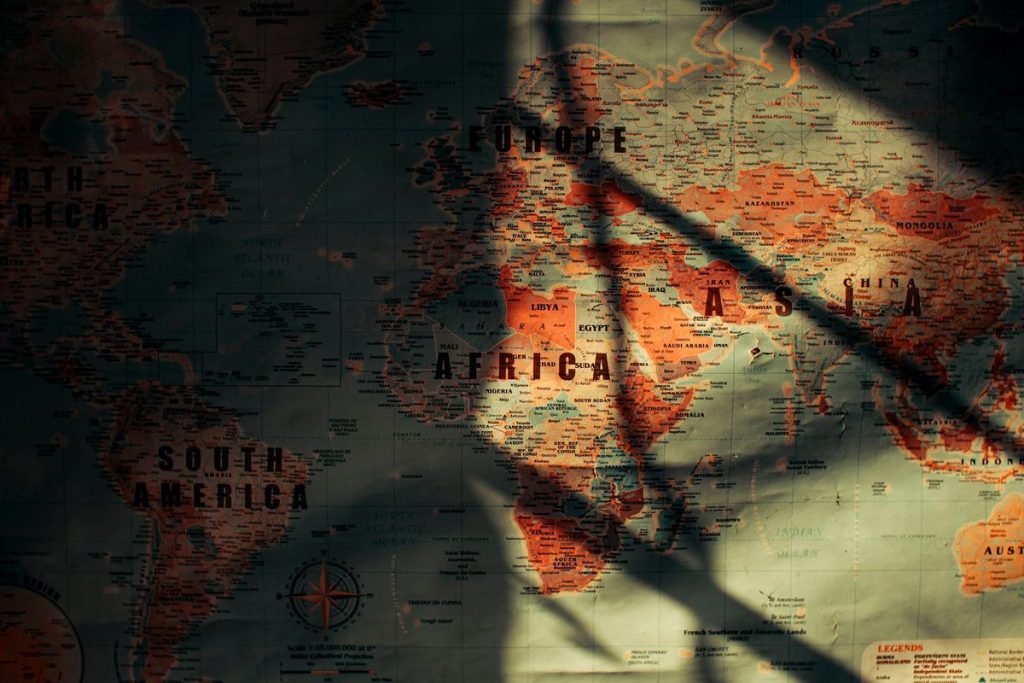
A United States government map displayed every country in Africa with incorrect labels during a global conference held on 30th July 2026. The significant mapping error reportedly overshadowed a US presentation at a global AIDS conference, according to Africanews. The blunder has drawn criticism and attention across international news outlets.
Reuters reported that a US government map was presented with every African country mislabelled at a global conference. The Daily Beast further highlighted the severity of the error, stating that the map disaster resulted in every single African country being named incorrectly.
Background
The incident took place during a crucial global AIDS conference on 30th July 2026, where a US presentation was scheduled. The unexpected mapping error quickly became the focus, detracting from the intended discussions. Africanews specifically noted that the map blunder overshadowed the US presentation, raising questions about accuracy in international communications.
Mapping Blunder Details
The erroneous map, which Africanews indicated was AI-generated, presented a comprehensive misrepresentation of the African continent’s political geography. Every single country was incorrectly identified, leading to widespread confusion and concern among attendees and observers.
The Daily Beast, in its report, connected the incident to Marco Rubio, describing the event as a “map disaster” where every African country was labelled incorrectly. The scale of the mislabelling was total, leaving no country accurately identified on the map presented by the US government. This type of error, particularly in a high-profile international setting, underscores the importance of rigorous verification processes for official materials.
Implications for International Relations
Such errors in official presentations can have broader implications for international relations, impacting perceptions of accuracy and diligence. The continent of Africa, comprising 54 recognised countries, is a diverse and vital region in global affairs. Accurate representation is crucial for fostering effective partnerships and understanding.
For instance, South Africa, a prominent nation on the continent, has been the subject of various news stories, from tackling xenophobia amid economic strain to its strong sporting records, such as the Springboks’ performance at Loftus Versfeld, and developments in its domestic football league, like Kaizer Chiefs being tipped for a leaner free transfer. These examples highlight the varied and complex narratives that define individual African nations, making precise geographical and political identification all the more critical.
The information was initially brought to light by reports including those from Reuters and Africanews, detailing the extent of the mislabelling.
FAQ
- What was the main error on the map?
A US government map mislabelled every single country in Africa at a global conference on 30th July 2026.
- Where did this incident occur?
The error occurred during a global AIDS conference, overshadowing a US presentation.
- When did this map blunder take place?
The incident was reported to have happened on 30th July 2026.
- Was there any information about the map’s origin?
Africanews reported that the erroneous map was AI-generated.
What this means for you
For readers in Oxford and Oxfordshire, and across the UK, this incident underscores the importance of accuracy in global information and international relations. As the UK maintains varied ties with nations worldwide, including those across Africa, the precise understanding and representation of countries are paramount. Errors such as this US government map blunder can impact diplomatic perceptions and highlight the need for all international actors to uphold the highest standards of factual correctness in their official communications. It serves as a reminder that even in an interconnected world, attention to detail regarding geopolitical facts remains crucial for fostering trust and effective global engagement.