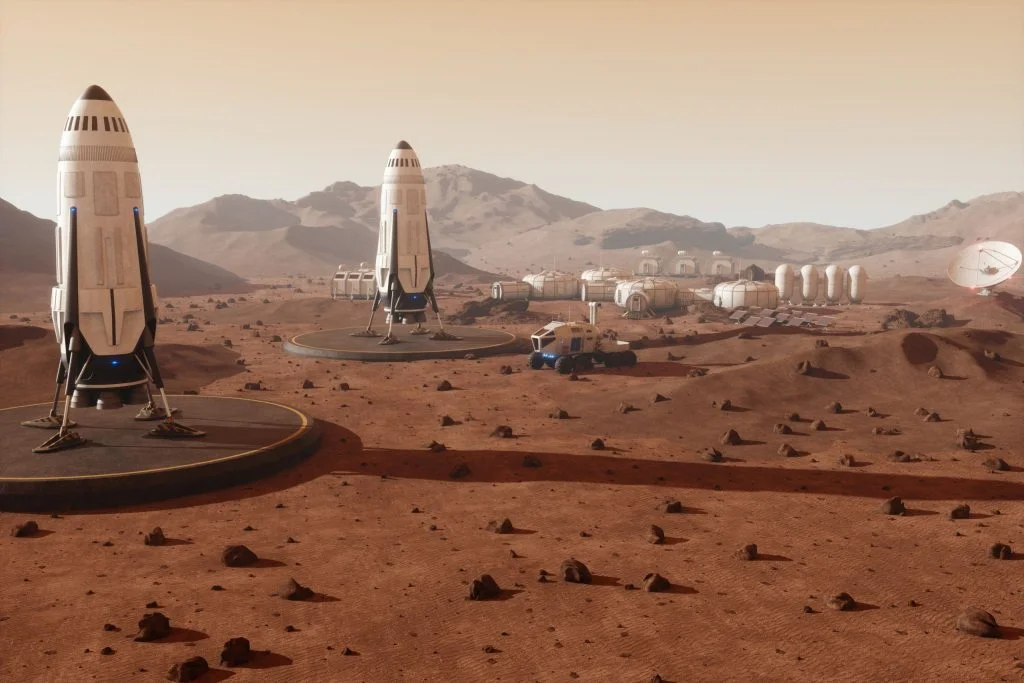
In a historic announcement, NASA and the European Space Agency (ESA) have joined forces for an ambitious mission to send humans to Mars by the year 2030. This joint venture represents one of the most significant collaborations in space history, combining resources, research, and advanced technology from across the world.
The mission aims to establish a sustainable human presence on Mars by testing advanced life-support systems, habitats, and propulsion technologies. According to mission director Dr. Laura Smith, “This is not just about reaching Mars—it’s about learning how to live beyond Earth.”
NASA’s Artemis program laid much of the groundwork by perfecting lunar logistics and spacecraft docking systems. Now, the Mars project will leverage these advancements to support longer-duration missions. The spacecraft, powered by nuclear thermal propulsion, promises faster travel times and reduced radiation exposure for astronauts.
ESA’s contribution focuses on robotics, navigation, and communication infrastructure. European engineers are developing high-speed interplanetary networks that will allow real-time communication between Mars and Earth—an innovation once thought impossible.
The mission also includes a fleet of robotic rovers that will precede the human crew to set up resource extraction units, such as water and oxygen generators. This pre-deployment will ensure astronauts have access to critical supplies upon arrival.
The collaboration extends beyond the US and Europe. Japan, Canada, and India have also expressed interest in participating through scientific instruments and satellite support. This marks a truly global effort to expand human civilization into space.
Critics, however, question the enormous cost of such missions, estimated at $120 billion. Others argue that the same investment could be used to solve pressing problems on Earth, such as poverty and climate change. Supporters counter that space exploration drives innovation that benefits all sectors, from renewable energy to medicine.
As NASA and ESA prepare for test launches in 2027, humanity stands on the edge of a new frontier. The dream of walking on Mars is closer than ever—and this mission may define the next century of exploration.