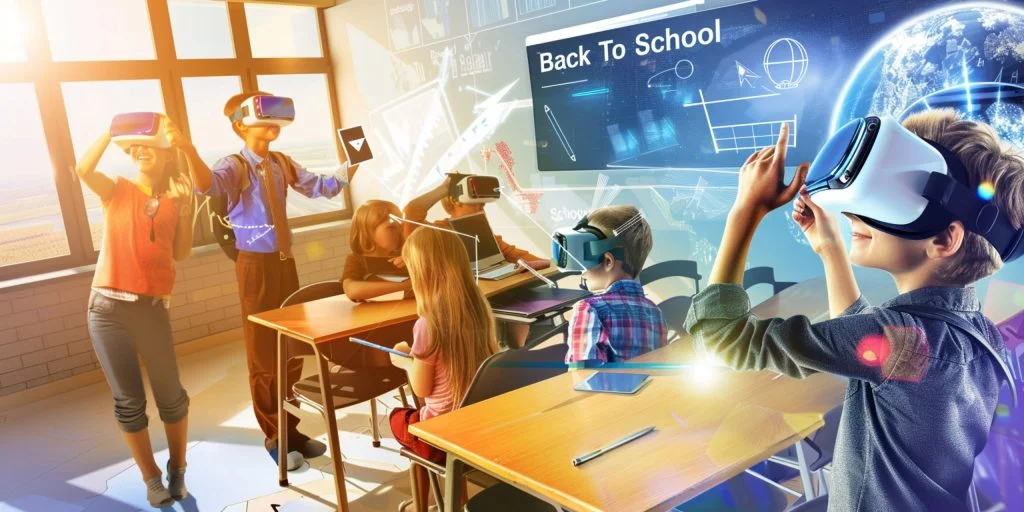
Artificial Intelligence has moved from being a futuristic concept to a fundamental part of global education. In 2025, AI-driven tools are reshaping classrooms by offering personalized learning, automating administrative tasks, and improving access to quality education across borders.
In developed nations, AI tutors and adaptive learning platforms are now standard in schools. These systems analyze each student’s performance, learning pace, and comprehension levels to tailor lessons accordingly. For instance, a student struggling with algebra receives customized exercises, while another can advance faster through complex material.
Meanwhile, developing countries are using AI to bridge the teacher-student gap. Online platforms powered by AI chatbots provide remote assistance to learners in rural regions, ensuring that geography no longer limits educational access.
Teachers are also benefiting from automation. AI can now grade assignments, track attendance, and generate progress reports—allowing educators to focus more on mentorship and creativity. Universities are using predictive analytics to identify students at risk of dropping out, providing early interventions to improve retention.
However, the integration of AI in education raises ethical concerns. Data privacy, bias in algorithms, and over-dependence on technology are major discussion points among policymakers. Experts emphasize the need for regulations to ensure transparency and equality.
The EdTech market is projected to exceed $500 billion by 2026, driven by hybrid learning and continuous innovation. AI’s presence in classrooms is not replacing teachers—it’s empowering them to become facilitators of knowledge rather than mere deliverers of information.
Education is evolving, and AI is leading the transformation. The classrooms of 2025 are not confined by walls—they are intelligent, adaptive, and inclusive.